
Easy Moves to Stay Fit
No Equipment Exercises for Home
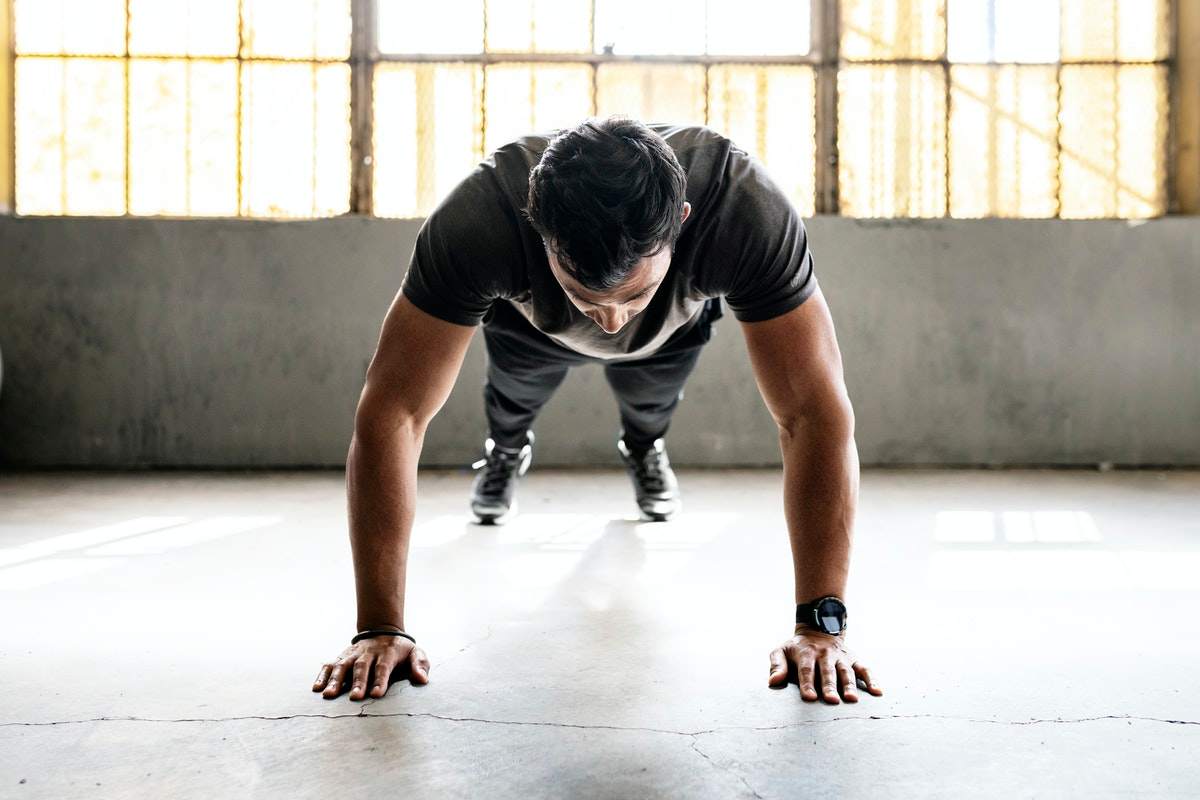
Want to get fit but don’t have access to a gym? No worries. These no equipment exercises are simple, effective, and can be done in any room. Whether you’re starting out or getting back into shape, this list will help you build a strong home workout routine without spending a rupee on equipment.
1. Jumping Jacks
A classic warm-up that gets your heart pumping.
- Starting Position: Stand tall with feet together and arms at your sides.
- First Jump: Slightly bend your knees and jump, simultaneously moving your feet out to the sides and raising your arms out to the sides and above your head.
- Second Jump: Jump again to return to the starting position, bringing your feet together and your arms back to your sides.
- Repeat: Continue this sequence for the desired number of repetitions.
Benefits: Improves cardiovascular health and warms up your muscles.
Tip: Do 3 sets of 30 seconds each.
2. Push-Ups
A full upper-body bodyweight workout you can do on the floor.
- Start in a high plank position, with your palms flat on the floor, stacked directly below your shoulders.
- Squeeze your shoulders, glutes, and core to create full-body tension.
- Bend your elbows to descend to the floor, stopping with your chest just above the ground.
Target Areas: Chest, shoulders, triceps, and core.
Beginner Tip: Start on your knees if regular push-ups feel hard.
3. Squats
Perfect bodyweight workout for your legs and glutes.
How to Perform Squats:
1. Foot Placement:
- Stand with feet either hip-width or slightly wider than hip-width apart, with toes pointing slightly outwards.
- Some individuals may find a wider stance and slightly outwards foot angle more comfortable for their joints.
2. Core Engagement:
- Engage your core muscles throughout the entire movement to stabilize your spine and protect your lower back.
3. Hip Hinge and Descent:
- Initiate the squat by pushing your hips back and down, as if sitting in an imaginary chair.
- Keep your chest lifted and your back straight.
- Maintain a neutral spine with a slight arch in your lower back.
- Aim to lower your hips until your thighs are parallel to the floor or slightly below.
- Ensure your knees track in line with your toes.
4. Ascent:
- Drive back up through your heels, extending your hips and knees simultaneously.
- Squeeze your glutes at the top of the movement.
5. Breathing:
- Inhale as you lower down into the squat, and exhale as you push back up.
Why It Works: Strengthens thighs, glutes, and hips using your bodyweight.
Form Tip: Keep your back straight and knees behind your toes.
4. Plank
A core-blasting move for stability and strength.
How to Perform Plank:
1. Starting Position:
- Lie face down on the floor with your feet together.
- Place your forearms on the ground, keeping your elbows directly under your shoulders.
- Extend your legs, resting your weight on your forearms and toes.
2. Engaging Your Core:
- Draw your belly button in towards your spine, bracing your core.
- Squeeze your glutes to stabilize your hips and maintain a straight line.
- Contract your low back, lats, and rhomboids.
3. Maintaining Proper Form:
- Form a straight line from your head to your heels, avoiding a sagging or raised butt.
- Keep your gaze down to keep your neck in a neutral position.
- Engage your abdominal muscles and take steady breaths.
4. Holding the Plank:
- Aim to hold the plank for as long as you can while maintaining proper form.
- Gradually increase the hold time as you get stronger.
Hold Time: Start with 20–30 seconds, gradually increase.
Bonus: Also works shoulders and back.
5. High Knees
Cardio meets strength training.
How to perform high knees:
- Start standing: Stand with feet hip-width apart, arms relaxed at your sides.
- Lift a knee: Bring one knee up towards your chest, aiming for waist level or higher.
- Alternate legs: Quickly lower the first leg and repeat with the other leg, alternating in a running motion.
- Engage your core: Keep your core muscles engaged to maintain an upright posture and stabilize your body.
- Coordinate arms: Swing your arms in a natural running motion, opposite to the moving leg.
- Land lightly: Focus on landing on the balls of your feet to reduce impact and maintain a quick pace.
- Control the movement: Maintain a controlled and rhythmic pace throughout the exercise.
How to Do It: Jog in place, bringing your knees to waist level.
Goal: Do for 1 minute to raise your heart rate.
6. Lunges
One of the most effective lower-body moves.
How to perform high lunges:
Starting Position:
- Stand with your feet hip-width apart, keeping your back straight and core engaged.
- Your shoulders should be back and relaxed, with your gaze neutral.
Step Forward:
- Step forward with one leg, landing heel first.
- Keep your feet hip-width apart to maintain stability.
- Ensure your front knee stays behind your front toes as you lower down.
Lowering:
- Bend both knees to a 90-degree angle, lowering your body until your back knee is just above the floor.
- Keep your torso upright and avoid leaning forward.
- Engage your core to maintain stability and prevent your back from arching or rounding.
Returning to Starting Position:
- Push off with your front heel to return to the starting position.
- Ensure you stand all the way up and complete the full range of motion.
- Alternate legs for each repetition.
Variations: Forward lunges, backward lunges, or side lunges.
Pro Tip: Keep your upper body straight and step wide for balance.
7. Wall Sit
Strengthens your quads and tests your endurance.
Technique:
1. Position: Stand with your back against a stable wall, feet hip-width apart and approximately two feet away from the wall.
2. Lowering: Engage your abdominal muscles and slowly slide your back down the wall, bending your knees until your thighs are parallel to the floor and your knees are at a 90-degree angle.
3. Knee Placement: Ensure your knees are directly above your ankles, rather than extending past your toes.
4. Back Alignment: Keep your back flat against the wall throughout the movement.
5. Core Engagement: Maintain a strong core throughout the exercise to stabilize your lower body.
6. Hold: Hold the position for a specified duration, typically 20 to 60 seconds, depending on your fitness level.
7. Rising: Slowly slide back up the wall to a standing position, pushing through your heels.
How It Works: Sit against a wall like there’s a chair underneath.
Duration: Start with 30 seconds, aim for 1 minute.
8. Mountain Climbers
A full-body, high-intensity move.
Technique:
- Starting Position: Begin in a high plank position, with your hands directly under your shoulders, feet extended back, and your body in a straight line from head to heels.
- Engage Core: Tighten your core muscles to maintain a stable and neutral spine.
- Alternating Knee Drive: Bring one knee towards your chest, as if you’re climbing a mountain, then quickly switch and bring the other knee in.
- Maintain Form: Keep your hips low and your back flat throughout the movement.
- Control the Speed: You can perform mountain climbers at a faster pace for a cardio workout or slower for more core engagement.
- Proper Breathing: Inhale and exhale with each leg movement to maintain a steady rhythm.
Why It’s Great: Targets core, arms, and legs while burning calories.
Speed Tip: Go fast for cardio, slow for core control.
9. Glute Bridges
Perfect for your backside and core.
Technique:
- Lie on your back and set your knees about shoulder-width apart, with your feet flat to the ground and your knees bent. Make sure your toes are pointed straight forward and that your heels are 6–8 inches from your glutes. Lay your arms flat on either side of you with your palms open toward the ceiling.
- Slowly raise your hips, engage your glutes, and squeeze your abs.
- Be careful not to arch your back as you lift your hips as high as possible. A perfect glute bridge consists of elevating your hips until your torso makes a straight line from your shoulder up to your knee.
- Once you reach the top of the glute bridge, squeeze your glutes as tightly as possible and hold for a few seconds.
- Lower your hips back down to the ground in a controlled motion without releasing the tension in your abs and glutes.
Execution: Lie on your back, knees bent, lift hips up.
Muscles Worked: Glutes, hamstrings, lower back.
10. Arm Circles
Simple but effective for shoulder and arm mobility.
Technique:
- Stand upright with your feet shoulder-width apart or sit in a chair with your back straight and your feet on the floor. …
- Move your arms in a forward circle 10 times.
- Move your arms in a backward circle 10 times.
- Repeat steps two and three at least three times.
How to Do It: Extend arms to the side, make small circles.
Routine: Forward and backward, 30 seconds each.
Final Thoughts
These no equipment exercises prove that you don’t need a gym to stay active. With just your body and some consistency, your fitness without equipment journey can begin right now. Build your own home workout routine and level up every week by performing these exercises at home!